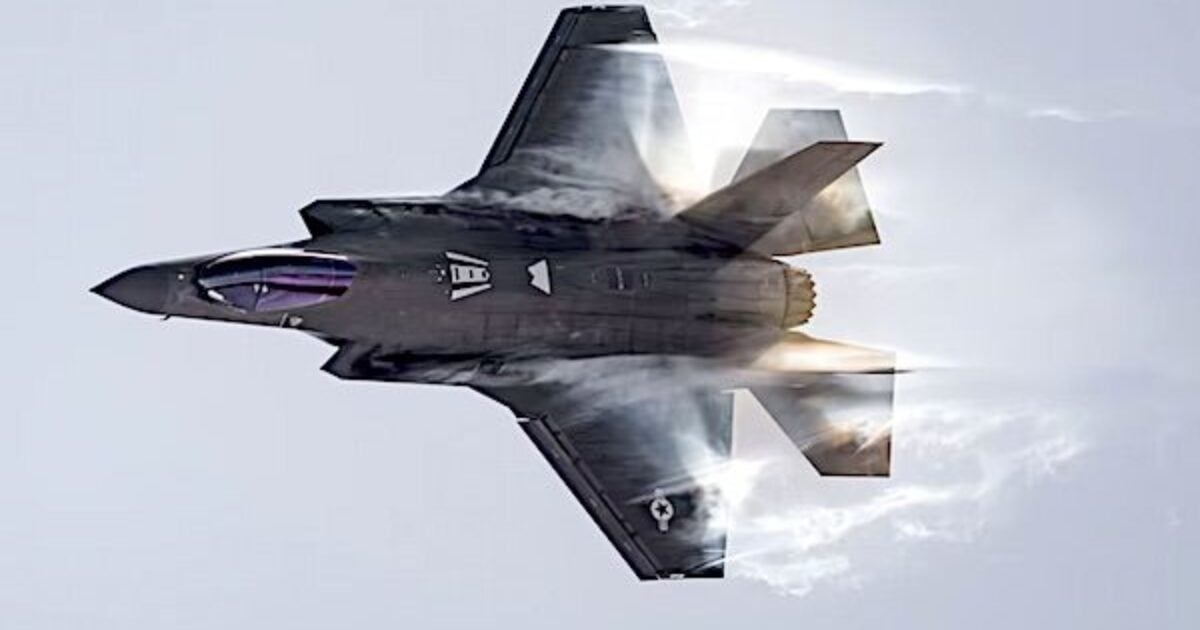
Iran Forces F-35 Landing: A New Flashpoint in US-Iran Standoff
In a development sending ripples through international security circles, recent reports from IDNFinancials have claimed that Iran successfully forced a U.S. F-35 fighter jet to make an emergency landing. This unprecedented incident, if fully confirmed, marks a significant and potentially dangerous escalation in the long-simmering tensions between the United States and Iran. It thrusts Iran News to the forefront of global attention, highlighting not only military capabilities but also the volatile diplomatic landscape of the Middle East.
The alleged F-35 incident comes amidst a period of heightened confrontation, with various reports detailing Israeli airstrikes in Tehran, Iran's resolute warnings against targeting its energy infrastructure, and ongoing debates about the efficacy and ethics of military intervention. As the world watches, the stakes for regional stability and global energy markets continue to rise.
The F-35 Incident: A New Chapter in Escalation
The report that Iran forced a U.S. F-35 to make an emergency landing is a claim of considerable strategic weight. The F-35 Lightning II is a cornerstone of modern American air power, renowned for its stealth capabilities, advanced avionics, and multi-role functionality. To assert that Iranian forces could compel such a sophisticated aircraft to land suggests either a previously unknown technical capability on Iran's part, an unforeseen operational challenge for the U.S. aircraft, or a tactical maneuver that caught the U.S. by surprise. This claim, regardless of its immediate official confirmation from U.S. sources, immediately serves as a powerful narrative for Iran, bolstering its perceived military prowess and potentially influencing regional dynamics.
Such an event could be interpreted in several ways:
- Technological Challenge: It could indicate an advancement in Iran's electronic warfare or air defense systems capable of disrupting cutting-edge stealth technology.
- Propaganda Victory: For Tehran, even the credible *report* of such an event could be a significant psychological victory, demonstrating its ability to challenge superior American military hardware. This would undoubtedly be amplified in internal Iran's State Media, Culture, and Political Landscape.
- Escalation Risk: Any direct interaction leading to such an outcome carries inherent risks of miscalculation and rapid escalation, potentially pushing both sides closer to a wider conflict.
The incident forces analysts to re-evaluate the operational environment in the Persian Gulf and contemplate what new rules of engagement or deterrence strategies might emerge from this direct, albeit still unfolding, confrontation.
The Broader Conflict: Military Maneuvers and Strategic Stakes
The alleged F-35 incident is not an isolated event but rather a particularly sharp spike in an already volatile trajectory of US-Iran relations. Recent Iran Conflict: Fuel Prices, Sanctions, and Hormuz Tensions illustrate the ongoing military and economic pressure points:
- Israeli Actions: AP News reports that Israel has "pounded Tehran with airstrikes" as Iranians mark Nowruz, the Persian New Year. These aggressive actions are a clear signal of Israel's unwavering stance against Iran, with Oman even claiming that Israel "pushed US into Iran war when deal was possible," according to The Guardian.
- Iran's Red Lines: The Guardian also quotes Iran stating it will show "zero restraint" if its energy infrastructure is targeted again, underscoring the critical economic and strategic value of these assets to the Islamic Republic. This warning directly relates to the energy vulnerabilities of the region and beyond.
- Strait of Hormuz: As BBC's Raja Mohan highlighted, the Strait of Hormuz remains a crucial choke point for global oil transit. Any significant escalation or disruption here would have immediate and severe global economic consequences. Monitoring which ships are passing through becomes a daily concern for international security.
- The Cost of Conflict: The economic toll of the standoff is immense. The Guardian reported that the "war on Iran cost the US $12.7bn by day six," with NPR adding that "The Pentagon wants an extra $200 billion for the Iran war and beyond." This financial outlay underscores the gravity and long-term commitment implied by sustained military pressure.
- Nuclear Program: NPR also cited the U.N. atomic energy chief, who stated that "War can't entirely eliminate Iran's nuclear program." This pragmatic assessment suggests that military solutions may be incomplete, pushing the focus back to diplomacy or protracted containment.
These developments paint a picture of a region teetering on the edge, where military posturing and economic pressure are intertwined with complex diplomatic maneuvers.
Global Repercussions: Energy Markets and Economic Fallout
The US-Iran standoff extends far beyond the borders of the Middle East, primarily through its profound impact on global energy markets and the broader economy. The interconnectedness of modern supply chains means that instability in one major oil-producing region quickly translates into worldwide challenges:
- Fuel Price Surge: The New York Times reported that "Iran War Fallout: Southeast Asia Hard Hit by Skyrocketing Fuel Prices." This illustrates how geopolitical tensions directly impact the cost of living and economic stability in distant nations. For developing economies, such price shocks can derail growth and exacerbate poverty.
- Energy Transition Risks: The BBC highlighted that "Gas shortage risks pushing India towards polluting fuels." This is a significant setback for global climate goals, as nations like India, facing energy insecurity, might revert to cheaper, dirtier alternatives to meet their immediate needs, undermining efforts to transition to cleaner energy.
- Sanctions and Supply: The BBC also mentioned that the "US considers lifting sanctions on some Iranian oil." This signals a recognition of Iran's potential role in stabilizing global oil supplies, even amidst sanctions. Such a move would be a complex diplomatic tightrope walk, balancing punitive measures with global economic stability. It also underscores the tactical flexibility the US might employ.
Practical Tip: Businesses and consumers globally should monitor Iran Conflict: Fuel Prices, Sanctions, and Hormuz Tensions closely. Diversifying energy sources, investing in renewable energy, and preparing for supply chain disruptions are becoming increasingly important strategies in this volatile environment.
Iran's Internal Dynamics: Culture, Media, and Resilience
To fully understand the current standoff, it's crucial to look beyond the headlines and consider the internal dynamics within Iran. The blend of ancient Persian culture and Islamic theocracy, as highlighted by The Jakarta Post concerning Nowruz, provides a unique context for how these external pressures are perceived and responded to domestically.
Amidst the escalating conflict, Iranians continue to celebrate Nowruz, the Persian New Year, a deeply cultural event that transcends political divisions. This cultural resilience in the face of external threats and internal challenges is a critical aspect of Iranian identity.
The Iranian media landscape also plays a vital role in shaping public opinion and government policy. The newspaper "Iran," for instance, is the official daily of the government, owned and published by the Islamic Republic News Agency (IRNA). As a "pro-government conservative daily," its reporting on incidents like the F-35 claim would naturally align with the official narrative, emphasizing national strength and resilience. Its history of closures by the Press Supervisory Board, such as in 2006 for a "divisive and provocative" caricature and in 2013 for an "alleged false report," highlights the tight state control over information and the sensitivities within Iranian society.
This controlled media environment means that what is presented as "Iran News" domestically might differ significantly from international reporting. Understanding these internal mechanisms is key to deciphering Iran's strategic communications and its public stance on global issues. For a deeper dive, explore Beyond War: Iran's State Media, Culture, and Political Landscape.
Navigating the Future: De-escalation or Deeper Crisis?
The alleged F-35 incident, coupled with the ongoing Israeli airstrikes, Iran's stern warnings, and the crippling economic fallout, paints a concerning picture for the future of the US-Iran standoff. The current trajectory suggests a dangerous path of escalating tensions, with each incident potentially pushing the region closer to a full-scale conflict.
While some, like Al Jazeera, suggest the "US-Israeli strategy against Iran is working," the high economic costs and the UN's assessment that war cannot fully eliminate Iran's nuclear program, raise questions about the long-term viability and wisdom of a purely confrontational approach. Diplomatic channels, though strained, remain critical. Oman's perspective, suggesting that a deal was possible before Israel allegedly pushed the US into war, highlights the potential for alternative pathways.
Insight: The current environment necessitates careful statecraft. Both sides need to find ways to communicate and de-escalate, even while maintaining strong deterrents. The global community has a vested interest in encouraging dialogue and preventing a wider conflict that would have catastrophic humanitarian and economic consequences.
Actionable Advice: International organizations, regional powers, and major global players should continue to advocate for restraint, support diplomatic initiatives, and explore mechanisms for de-escalation. Monitoring official statements from all parties, as well as independent reporting on incidents like the F-35 landing, is crucial for understanding the true dynamics at play.
The report of Iran forcing an F-35 landing, whether fully confirmed or not, serves as a stark reminder of the volatile nature of the US-Iran standoff. It underscores the urgent need for careful diplomacy and de-escalation to prevent a regional conflict from spiraling into a global crisis. The ramifications, from geopolitical shifts to energy market instability and humanitarian concerns, demand sustained international attention and a concerted effort to find a path toward peaceful resolution.